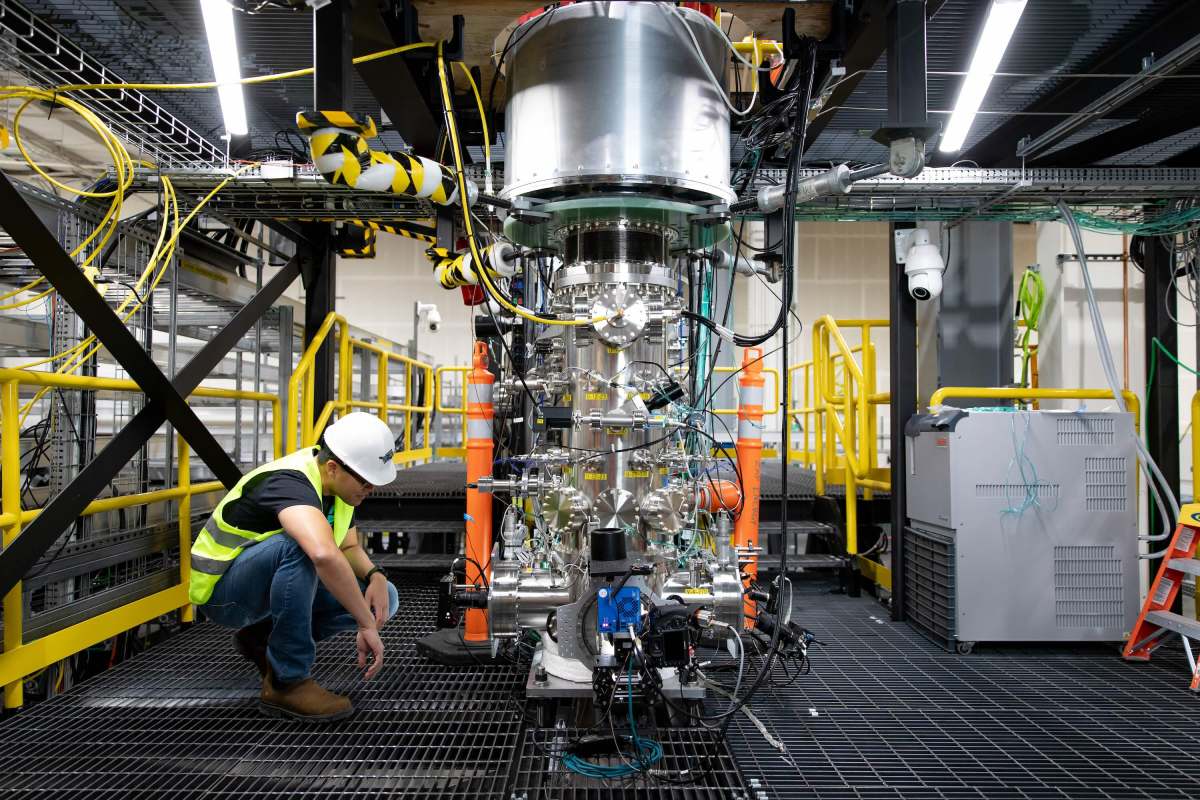
Fusion power startup Zap Energy pulls a partial pivot, adding…
But over the last year or so, fusion startup Zap Energy took a deeper look at its pathway to a working power plant and decided that it would be quicker to build a fission power plant first. “Fission and fusion are two sides of the same coin,” Zap’s new CEO Zabrina Johal told TechCrunch. “They have so many challenges that are congruent with each other.” Zap is among the better-funded fusion startups , having raised more than $300 million, so this partial pivot holds some shock value, no matter how many synergies exist between fission and fusion. Tech companies want electricity today, and one of the challenges facing every fusion startup is that grid-ready power plants won’t be ready for several more years — likely a decade or more. “There is not enough power and energy in the world to build all the data centers that are needed,” Johal said. “It just meant we need to pull this in faster, we need to get something that’s relevant to the grid today.” Fission is commercially viable in a way that fusion is not. Johal said that Zap expects to start generating revenue from the new fission business within a year. “Our business model is not dependent upon generating electrons,” she said.
Ultimately, it was never built, but Johal said the design comes with “no intellectual property entanglement.” Johal expects there will be enough demand in the 2030s that Zap will find plenty of customers, despite being years behind other fission startups. “There will not be enough reactors in the near term,” she said. Zap argues that its fission plan will help it move faster on everything but the fusion reactor itself, including things like materials testing and power systems. Zap’s arguments that adding fission to its plate will help it reach commercial fusion power sooner are compelling, but time may prove me wrong.
Analysis: Why This Matters
When companies make decisions involving Zap Energy, the ripple effects often hit competitors, investors, and consumers within weeks.
Key Takeaways
- He has written for a wide range of publications, including Wired magazine, the Chicago Tribune, Ars Technica, The Wire China, and NOVA Next, where he was founding editor.
- Commonwealth Fusion Systems and Tokamak Energy are selling its high-temperature superconducting magnets to other fusion companies and experiments, while others like TAE and Shine Technologies are in nuclear medicine.
- He received his PhD in environmental science, policy, and management from the University of California, Berkeley, and his BA degree in environmental studies, English, and biology from St.
Watch for follow-up announcements from competing platforms — the industry rarely stays quiet for long after news like this.
Source: TechCrunch